
The Psychology of Same-Day Delivery: How Instant Gratification Drives Sales in Australia
By Cheryl Kahla ·
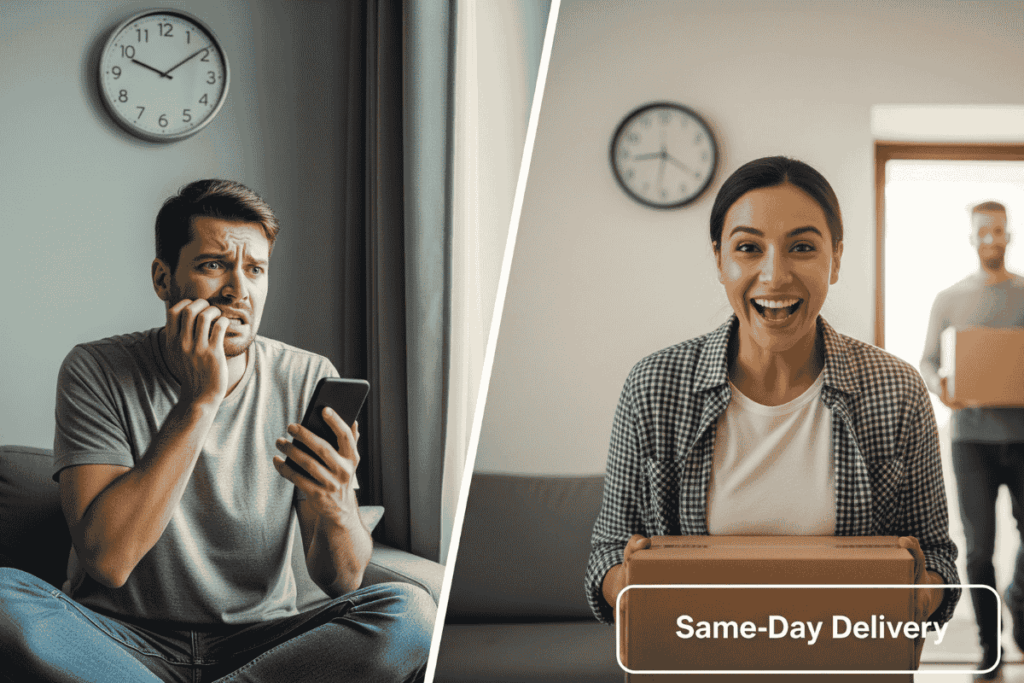
Understanding the psychology behind same-day delivery can help businesses make smarter decisions about when and how to offer fast shipping options. At its core, same-day delivery taps into some of the most powerful drivers of human behaviour.
The instant gratification effect
Humans are wired to prefer immediate rewards over delayed ones — a phenomenon psychologists call "temporal discounting." The longer we have to wait for something we want, the less valuable it feels. Same-day delivery exploits this tendency by minimising the gap between desire and fulfilment, making purchases feel more satisfying.
Reducing purchase anxiety
Online shopping involves inherent uncertainty. Will the item look like the photos? Will it fit? Will it arrive in time? Same-day delivery addresses the timing anxiety directly — customers know they'll have their purchase today, making them more likely to commit to the purchase.
The perceived value premium
Research shows that customers assign higher perceived value to items they receive quickly. A product delivered same-day feels more valuable than an identical product delivered in a week — even though the item itself hasn't changed. This perception can justify higher prices and premium services.
Scarcity and urgency
"Order before 2pm for same-day delivery" creates a time-based urgency that encourages faster purchasing decisions. Customers who might have browsed and left are motivated to act immediately to take advantage of the same-day window.
Trust and reliability signals
Offering same-day delivery sends a powerful signal about a business's capabilities and commitment to customer service. It communicates confidence, operational competence, and a customer-first mentality — all of which build trust and encourage first-time and repeat purchases.
Practical implications for retailers
Understanding these psychological drivers means retailers can use same-day delivery strategically: highlighting it prominently at checkout, using it for high-margin or time-sensitive product categories, and communicating the cut-off time clearly to create appropriate urgency without pressure.